
Welcome to the third in my three part series on holiday desserts from the Mediterranean. I started with biscotti, and last week shared Catalan neules. So today we have baklava and I have a bit of a confession to make. There is a reason that Baklava is the last of the Christmas treats that I’ve tackled. I am intimidate by it. The thought of making baklava has been such a daunting idea to me that I have put it off to last. There is reason (maybe good?) why this has been so intimidating to me. I’ll take a few minutes to share that below, but I have a second confession to make.
It isn’t daunting at all. In fact it was easier than I could have imagined. I can see LOTS of this delicious treat in my future. To be honest, I don’t really know what I was afraid of. It is really pretty easy. Five basic step, and only one is kind of complicated. Prepare syrup, chop nuts, clarify butter, layer phyllo dough, and bake. Only the clarifying the butter is a little tricky. But you don’t really need to get that one hundred percent right to have a good baklava.
My Introduction to Baklava
So why was the idea of baklava so intimidating to me? It, of course, goes back to my first memories of baklava. As I’ve shared before, my best friend through much of school was Greek. I would join his family for some holiday celebrations and baklava was always present. And always delicious. Also always present was the discussions about balkava. Which Aunt made the best version (it changed from year to year, and no one ever agreed) and why it was good. Perhaps most importantly for my views on making it was the talk about how big a deal it was to prepare. Based on all the talk of the ‘hours’ it took to prepare, and comparisons of methods, one thing was clear. Making baklava was not for the faint of heart.
As a result of all of this, I learned two lessons that I have had to “un-learn”. First, baklava is “Greek”. It is true that everyone I knew who made baklava when I was growing up was Greek. The Greeks were one of the larger immigrant communities in my home town (along with the Italians, the French Canadians, the Irish, the Polish, etc). Of our ‘local’ immigrant population, baklava belonged to the Greeks. The second lesson I learned was that baklava is hard to make. It was the type of treat so challenging that it was only to be made for the most special occasions. It turns out that neither of those early lessons are true. Although it is probable that the second lesson was true in the past. Let me explain.
Good Food Travels – The Unofficial Dessert of the Mediterranean
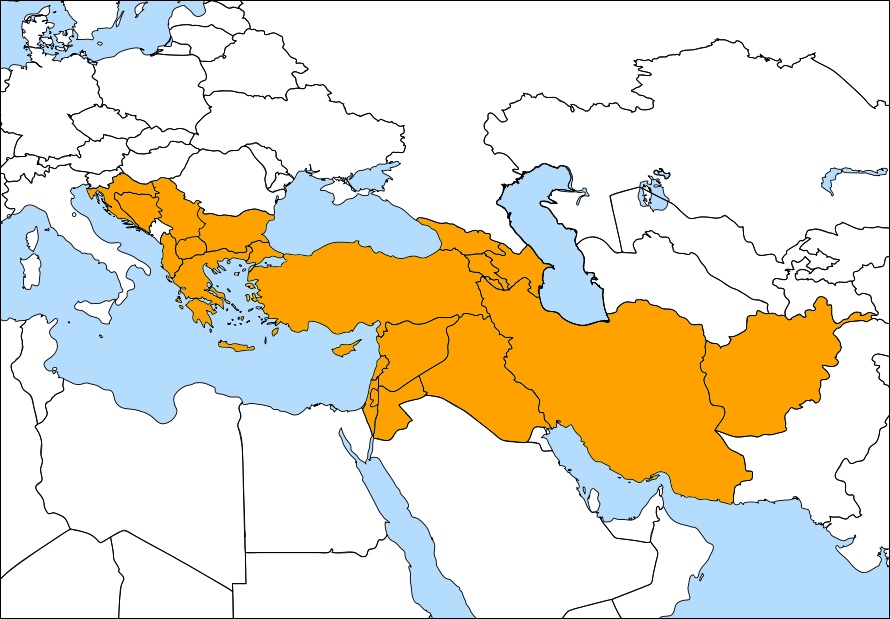
It is not true that baklava is a “Greek” food. Yes, the Greeks make baklava. It turns out that baklava of some version is common from Croatia all the way to Afganistan. Baklava is also very old, and both Christians and Muslims consider the food part of their celebrations. There is at least one theory that the modern baklava originated as a type of Roman dessert. That Roman dessert was ‘refined’ by the Byzantines to be much closer to today’s modern baklava. The Byzantine love for baklava cemented its place in both Greek and Turkish cuisine.
Through Byzantiums many interactions with Persia (both peaceful and not), baklava spread across the region. You can find it in modern day Armenia, Azerbaijan and Afganistan in the north. Continue to Iraq and Iran in the east, and to Syria, Jordan, Lebanon and Israel to the South. Dig a little deeper, and you can find variations through Egypt and North Africa across to Morocco. It seems that good food travels!
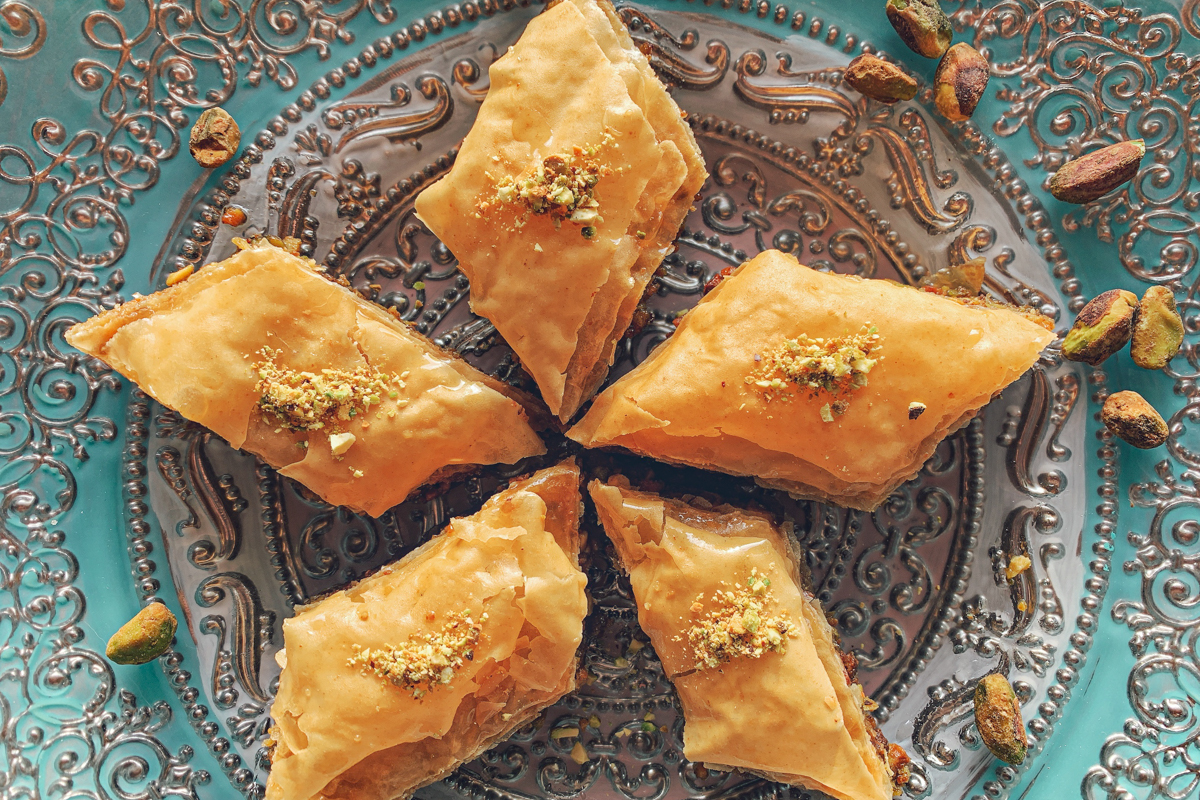
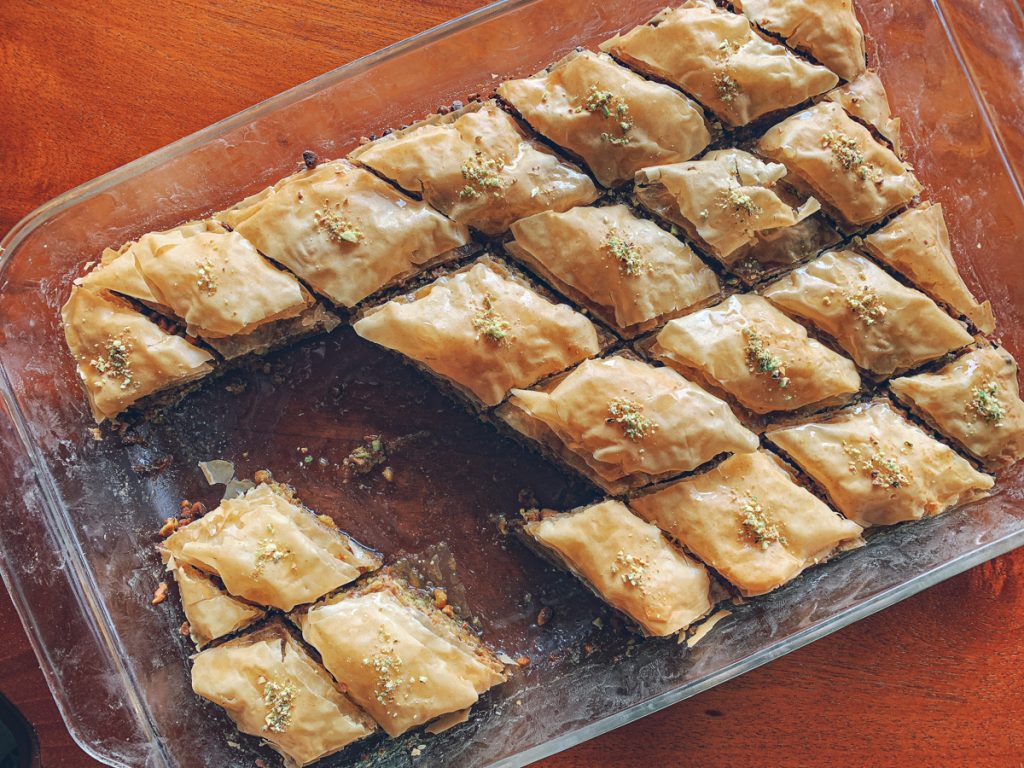
Depending where in the region you are, you can find this treat as ‘baklava’, ‘ paklava’, ‘baqlava’, ‘pakhlava’, ‘ruzcie’ or ‘paxlavasi’. No matter what it’s called it’s generally made the same way. Layers of phyllo filled with chopped nuts, sweetened and bound together with syrup. The regional variation are almost all about the choice of nuts used, and the make up of the syrup used. When cook, baklava pieces are traditionally shaped like diamonds in virtually all varieties. They do not all use phyllo layers though. I have a recipe in a cook book of an Iranian version that is cooked closer to a soft shortbread. It does get flavored by being soaked in a syrup and it is cut in a diamond shape.
Modern Technology Makes it Easy
So as we begin to talk about how baklava is made, the second lesson I had to un-learn is that baklava is hard to make. It is probably true that in the not too distant past, baklava was much more difficult to make than it is today. The process of making phyllo dough is a time consuming, day long and difficult one. Then there is finely hand chopping nuts. The process of preparing to make baklava was very, very labor intensive.
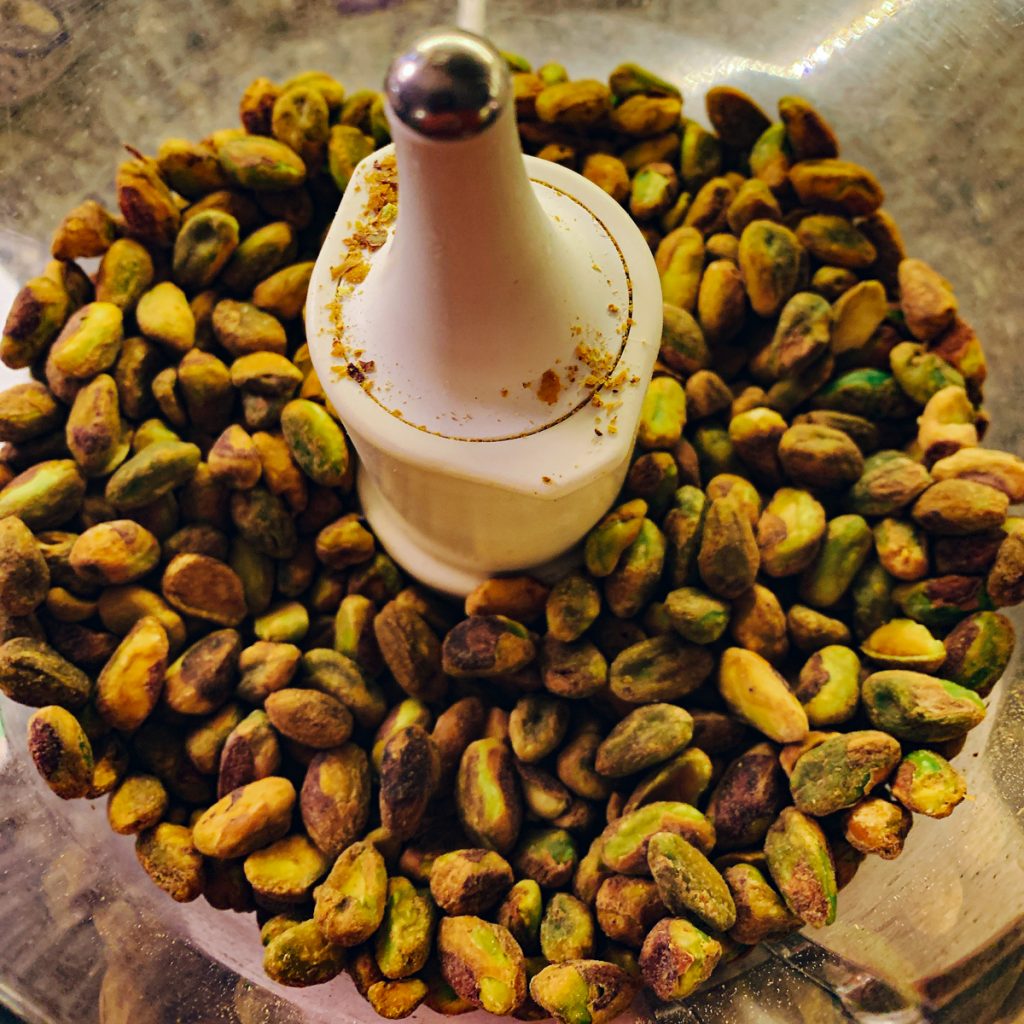
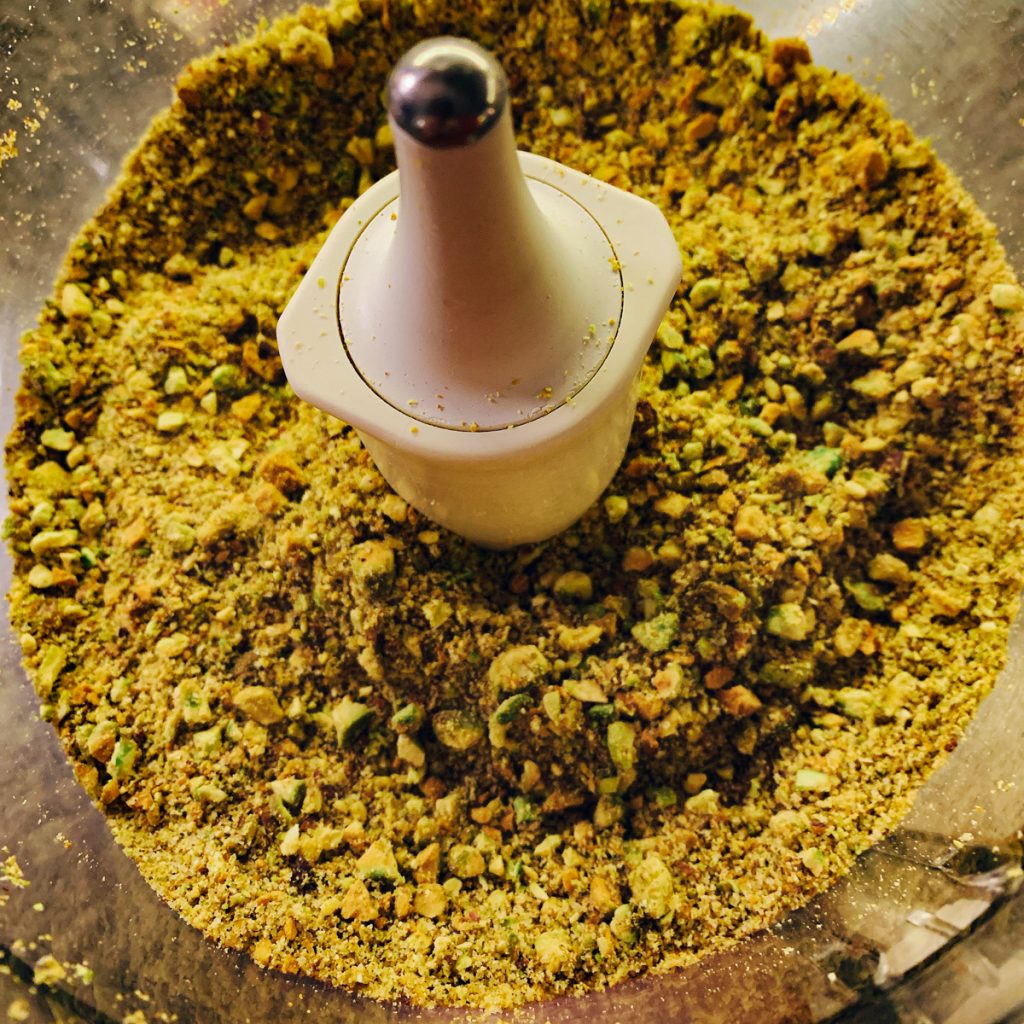
But modern technology has made much of that simpler for home cooks today. Phyllo sheets are pretty easy to find in the freezer section of most grocery stores. The only time you need is the time it takes them to thaw. And even then your only labor is moving them from the freezer to the refrigerator. Your grandmother would be jealous. A food processor makes the job of chopping nuts as easy as pushing a button. I can agree that making baklava in the past was an enormous undertaking and commitment of time. But it doesn’t have to be that today.
I’m not saying that baklava can just be thrown together in ten minutes. It still takes time, and some planning. Remember to take the phyllo out the night before. Make the syrup first. Cut the diamonds carefully. It all takes some thought and some time. But compared to days past, is now relatively easy to make, and there is not reason you shouldn’t give it at try.
Turkish Baklava
Several years back, I saw the movie “The Turkish Way”, where the Spanish chefs of the restaurant El Celler de Can Roca partnered with Turkish chefs in Istanbul. The idea was to help Turkish cuisine become the ‘new’ Spanish cuisine — that is become a global phenomenon. The premise was interesting, but that isn’t what stuck with me about the movie. No — it was the baklava that stuck with me. During a brief segment, they demonstrated “Turkish” baklava. Two things about this caught my eye. First, they used pistachios – one of my two favorite nuts. And second, they did not use honey. This was not the baklava I remember growing up, and was really my first hint that it wasn’t necessarily a ‘Greek’ dessert.
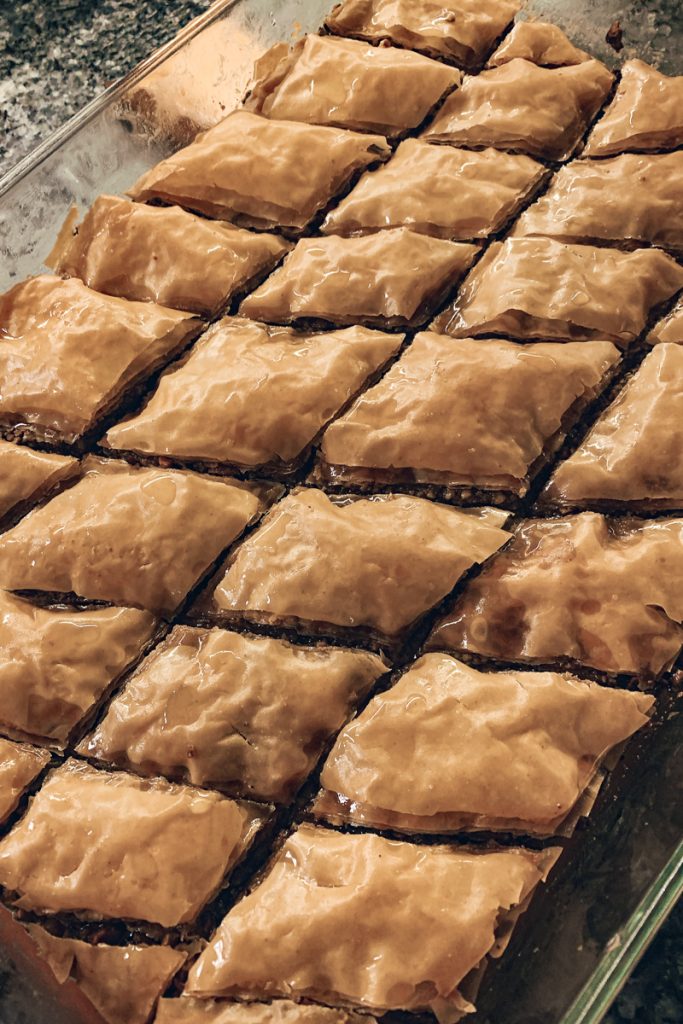
The baklava I had growing up usually had some blend of walnuts, almonds and spices for the nuts. And the ‘syrup’ was honey. The overall effect was of a very sweet and delicious dessert. As I said though, there are many regional variations, and they vary on which nuts and which syrup. Common nuts include walnuts, almonds, pistachios and even hazelnuts. This is very exiting news for me because here at mezze & tapas World HQ, our two favorite types of nuts are pistachios and hazelnuts. The syrup is usually a simple syrup of water and sugar, sometimes flavored with orange or rose water. Honey is also sometimes used.
In the movie, I learned that “Turkish” bakalava uses pistachios and plain simple syrup. At some level, this blog post has been bouncing around in the back of my mind since that film. I was determined to make “Turkish” baklava. Except it turns out that “Turkish” baklava uses pistachios or almonds, or hazelnuts, depending on what region of Turkey you are in.
This is not “Turkish” baklava
That leaves me with the idea that what I am making is NOT Turkish baklava. I am making baklava similar to that from one region of Turkey. But along the coast of the Black Sea in northern Turkey, they are more likely to use hazelnuts — a variety I also have to try (another time, alas). And in different regions of Turkey, walnuts and almonds are popular. So there isn’t a Turkish baklava. And although I will be using pistachios, they are not unique to Turkey either. You can find them in baklavas across the Middle East, as far south as Egypt and as Far East as Iran.
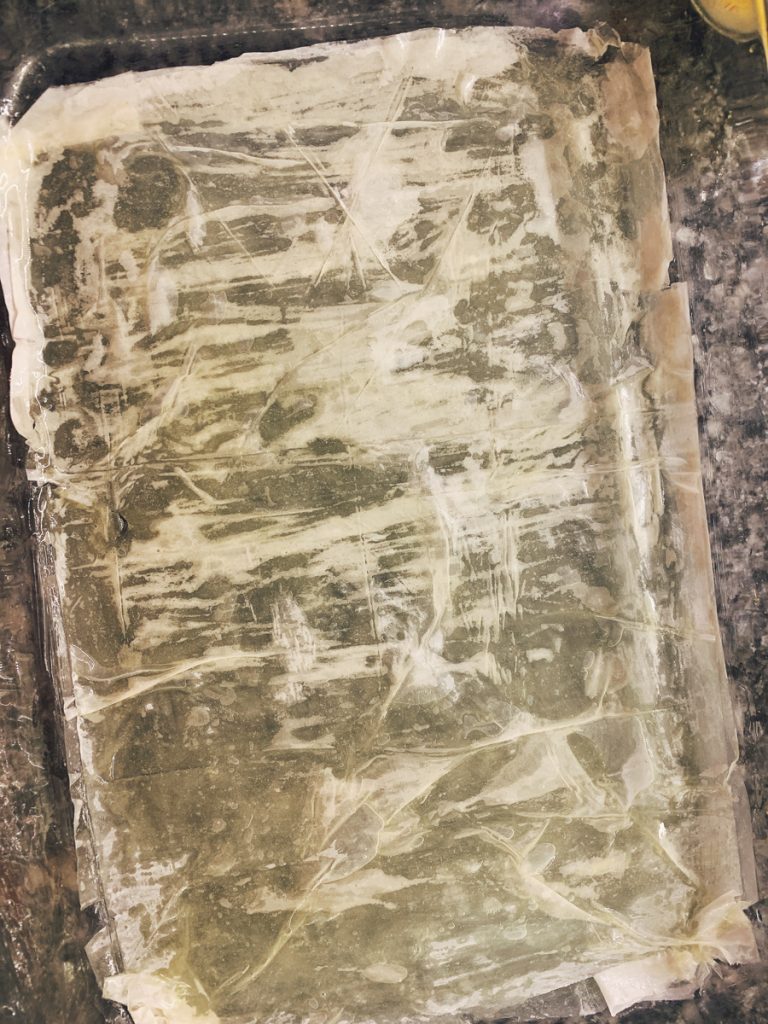
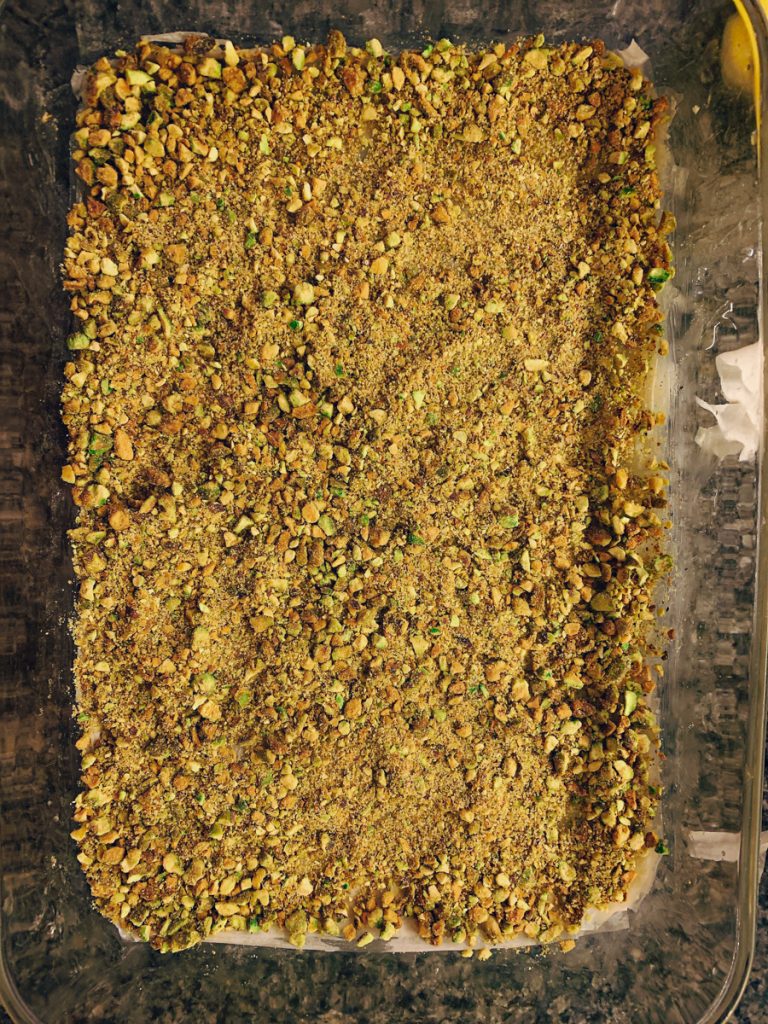
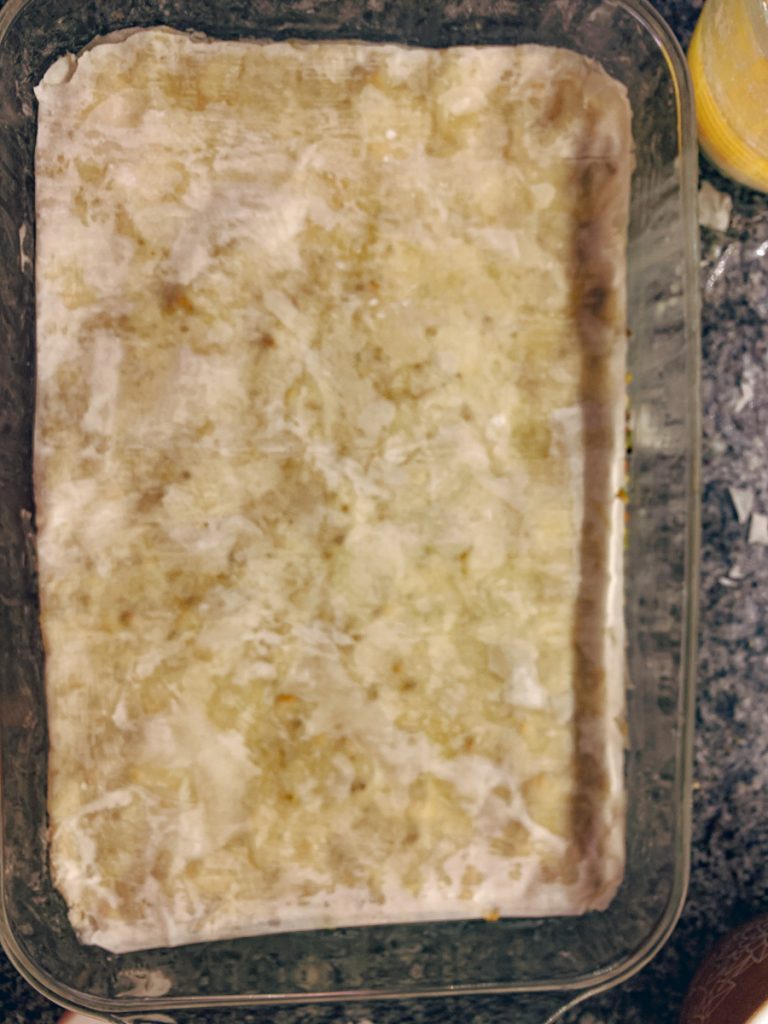
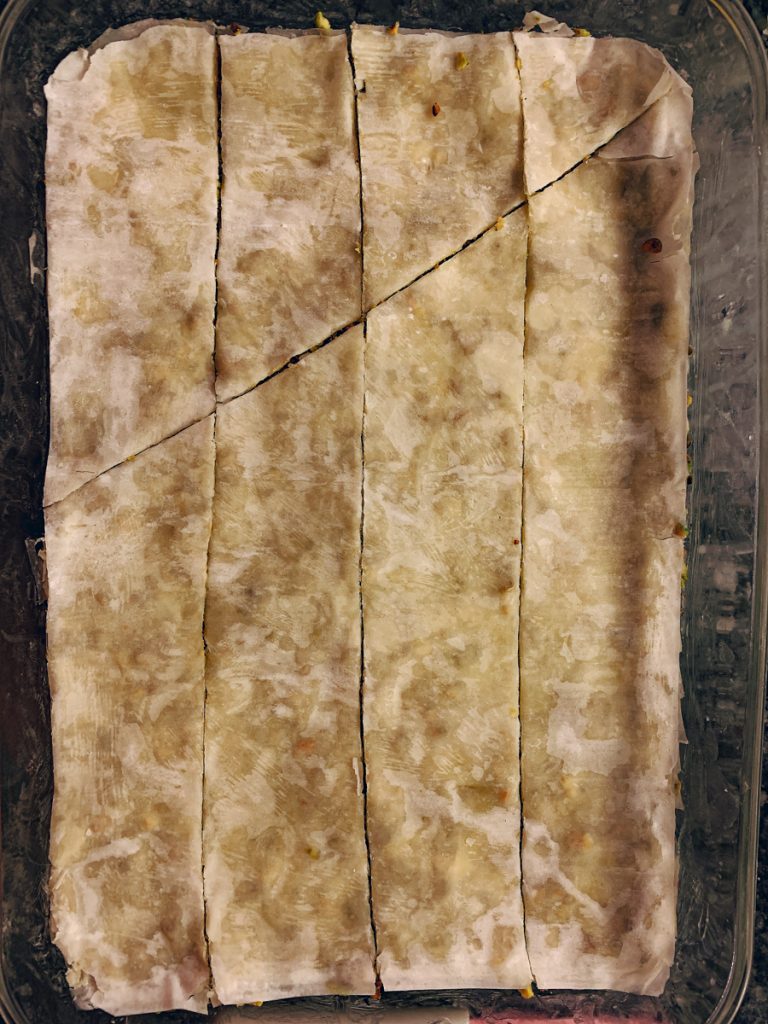
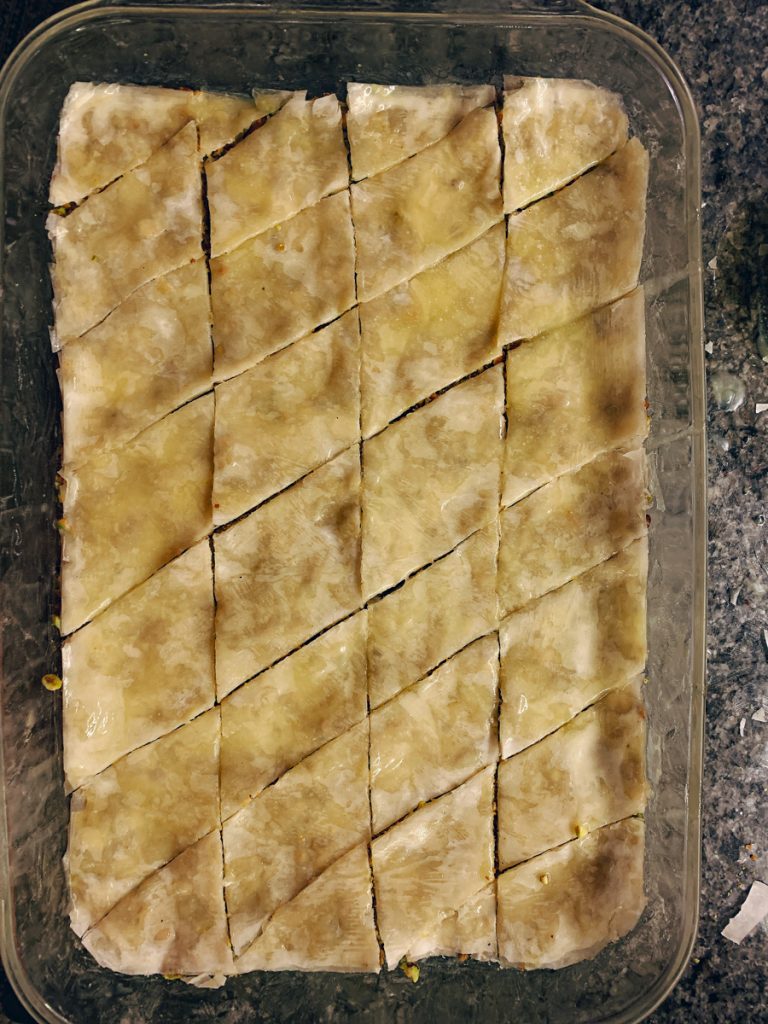
I will not try and label this baklava, then, as part of any particular country. I’ve learned my lesson – as baklava isn’t a “Greek” food, or a “Turkish” or “Bulgarian” for that matter. It is a dessert of the region, which really makes it an ideal treat for mezze & tapas. In fact, in addition to what I saw in the movie, I have also adapted my baklava from the Egyptian food blogger Cleobuttera
So How Was It To Make?
I’m sure you’re asking yourself (ok, you probably aren’t, but I like to think you are) “So was it as intimidating as you thought it would be?” The answer is no, not by a long shot. There are still a few tricks to learn, and I wouldn’t say it came out perfect. But it came out better than I expected, and the flavor is wonderful.
Working with phyllo dough isn’t as difficult as you might believe. You just have to remember to work with one piece at a time, and keep the others covered with a damp (not wet) tea towel. My biggest challenge was that the phyllo sheets were slightly bigger than my pan. And my pan had sloped sides. If it was ‘close’, I probably would have just slightly folded the edges of the phyllo to fit the pan. But it wasn’t that close, so I had to trim each piece. If you have to trim phyllo, be sure to use the sharpest knife you have.
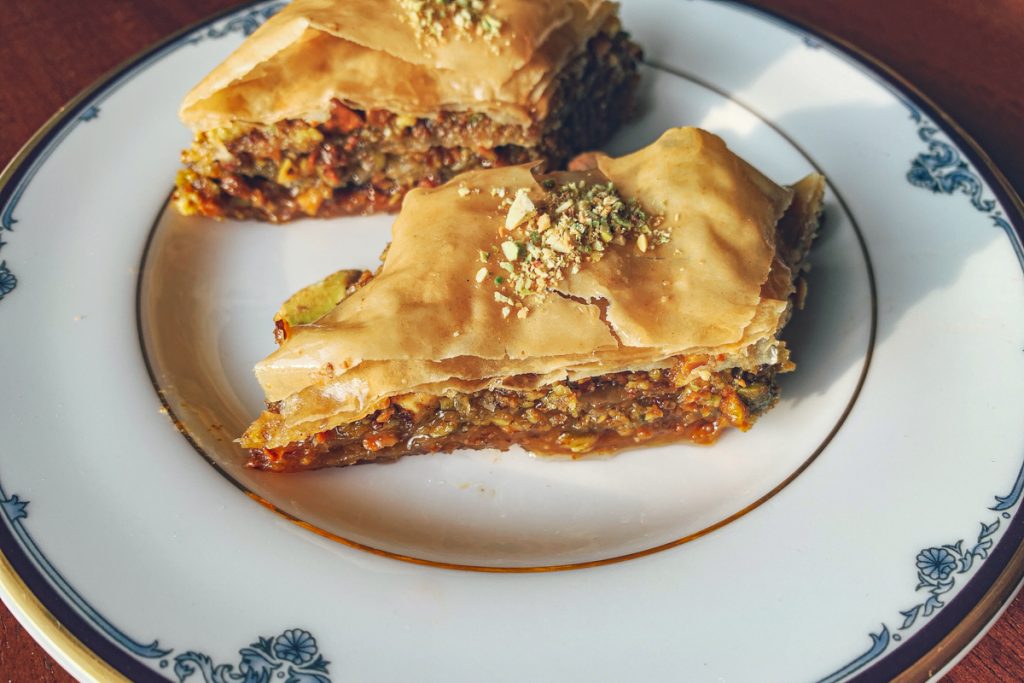
The other thing I would do different is to put more layers on the base. Starting with seven layers, I found that there wasn’t really enough of a base to better absorb the syrup. Sure, I expected some ‘gooeyness’, but I got more than I expected. In the future I think I will go to ten to twelve layers. I saw several recipes that used this many layers on the base, and now I know why.
Some Final Tips
Before I get to the recipe, I’m going to wrap up by saying there is no reason to not give making baklava a try. Although not a “quick” dessert to make, it is relatively easy. Let me leave you with a few miscellaneous tips to help make the process easier.
Be sure to thaw your phyllo dough properly. It is generally best to thaw it, in its wrap, overnight in the refrigerater.
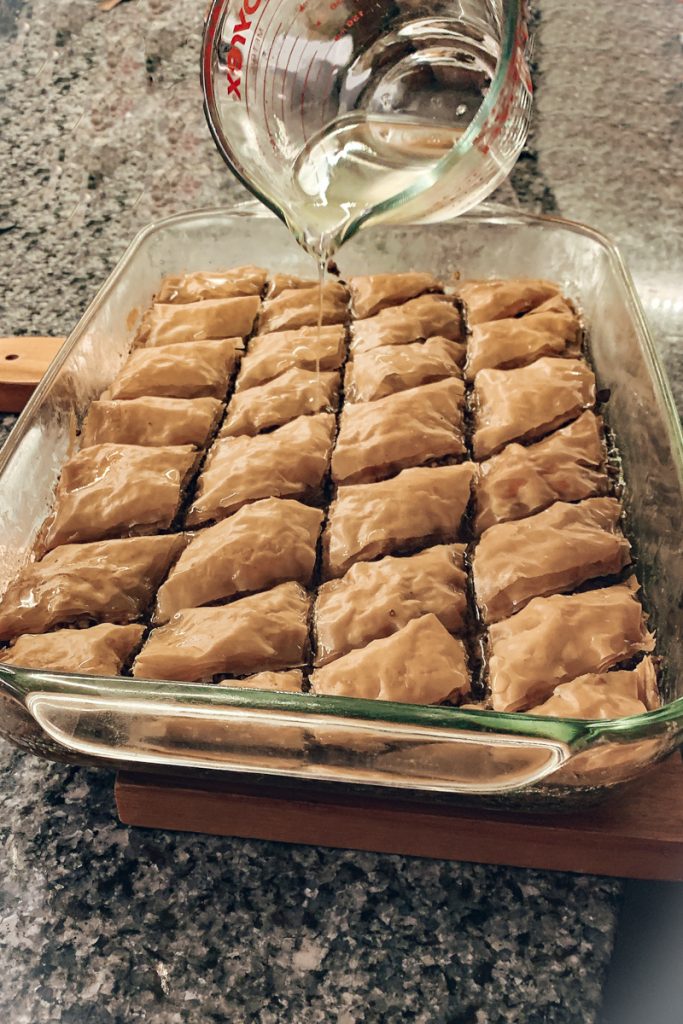
Make your syrup first. It needs to be cooled to room temperature before adding it to the baklava. Always add cool syrup to hot baklava so that you don’t have a soggy mess. So make the syrup and let it cool while everything else is going on.
Cut the assembled baklava into pieces before baking. Use a very sharp knife, and cut all the way through. If you wait until after it bakes, it will be to flaky and will disintegrate into a crumbly mess. The cuts also create channels for the syrup once the baklava is cooked.
This is pretty much the perfect make ahead dessert. It is best if it sits for a day before sampling (I know — SO hard!!). It is better the second days and it stores at room temperature, so no need to find space in the fridge.
Cover it with a loose wrap to store, but be sure it is completely cooled before you cover it or it will get soggy.
See the recipe notes for tips on storing and freezing (yes, freezing!) your baklava.